In the age of viral videos, anyone can film themselves doing something unusual and call it a “world record.” But filming an attempt and registering one are two very different things. So what actually separates a real, official world record from a claim made on social media?
At Official World Record (OWR), the answer comes down to one word: verification. Here’s exactly what that means and how it works.
The Problem with Unofficial or Self-Claimed Records
Every week, headlines celebrate someone as the “fastest,” “largest,” or “longest” at something. But before any of these claims can be taken seriously, one question needs to be asked: who verified it?
A record that hasn’t gone through a formal verification process isn’t really a record — it’s a claim. It may be a genuine, admirable feat, but without an institution checking the rules, reviewing the evidence, and formally registering the result, there’s nothing stopping anyone from claiming anything.
This is especially common on social media, where impressive feats go viral without anyone clarifying whether they were actually verified. Over time, this trivializes the idea of a “record” altogether and creates a false impression that any claim is as good as another.
A genuine record needs three things to exist:
- Specific rules — clear standards for how the attempt must be carried out (technique, permitted pauses, supervision, etc.)
- Exhaustive control — multi-angle video, credible eyewitnesses, accurate timing, and a thorough review for errors or fraud
- Formal registration — entry into an official database with the record number, date, location, participant details, and supporting evidence
Without all three, a feat stays a personal achievement — not an official world record.
OWR’s Verification Process
At OWR, every application goes through a structured, rigorous process before a record is ever certified. Here’s what that looks like, from your first message to us through to the final certificate.
1. Initial Application You start by reaching out to OWR with the details of your proposed record — what you plan to do, the category it falls under, and as much detail as possible about the act, location, and supporting facts. OWR commits to responding within 48 hours (excluding local holidays) to confirm whether the attempt is accepted, outline the applicable fees, and share any additional details needed.
2. Review by Instruction Judges Once your application is in motion, specialized Instruction Judges — assigned according to the category of your record — review and admit the request. They prepare a custom file for your specific record proposal and lay out the rules and regulations you’ll need to follow to set or break the record in question.
3. Approval by the International Acceptance Committee Every proposed record, along with its rules and category, must then pass through OWR’s International Acceptance Committee, the body responsible for formally approving or denying it. This is where the category, the regulations, and the conditions of the attempt are finalized.
4. Verification, Certification, and Registration Once your attempt has taken place under the approved rules, OWR’s judges verify and authenticate the evidence — videos, witness accounts, measurements, and other proof — against the category’s specific requirements. If everything checks out, your achievement is formally registered as an Official World Record, and your certificate, trophy, and medal are issued.
This isn’t a rubber-stamp process. It’s a layered system designed so that by the time a record is certified, it has been checked by specialists, reviewed by a dedicated committee, and backed by documented evidence at every step.
Who Reviews and Approves Applications?
OWR’s review process isn’t handled by a single person or a generic support team — it runs through two distinct bodies, each with a different role:
- Instruction Judges are specialists assigned according to the category of the record (sports, science, social causes, business, and more). They’re responsible for admitting and verifying requests, preparing the individual case file, and proposing the specific rules that will govern the attempt.
- The International Acceptance Committee is the body that has the final say. It approves or denies the proposed category and the rules attached to it, acting as the gatekeeper before any attempt can officially proceed.
This two-tier structure means every application is reviewed first by someone with relevant category expertise, and then checked again at a committee level before it’s accepted. It’s also why OWR is known for personalized treatment of each application rather than a one-size-fits-all checklist.
The Role of Notarial Validation
What truly sets OWR apart from most record-keeping organizations is its legal and notarial backing.
OWR is recognized by the Council of the Notariats of the European Union (CNUE) — making it the only world records register organization with this specific recognition. That recognition is tied to the apostille, a certification established by the Hague Convention of 1961, which validates the authenticity of a document’s signature so it can be legally recognized in other countries. Currently, 114 countries are members of the Hague Convention, which means an OWR certification carries legal weight far beyond its country of origin — something no other world record organization holds.
OWR is also registered as a legitimate NGO, with legal standing in both Spain and the United States, and is a registered trademark with the European Union Intellectual Property Office (EUIPO).
In practical terms, this means an OWR record isn’t just a nicely designed certificate — it’s backed by an institutional and legal framework that’s recognized by notary colleges around the world.
What You Receive Once Verified
Once your record clears the full verification process, you don’t just get a line of text on a website. OWR issues:
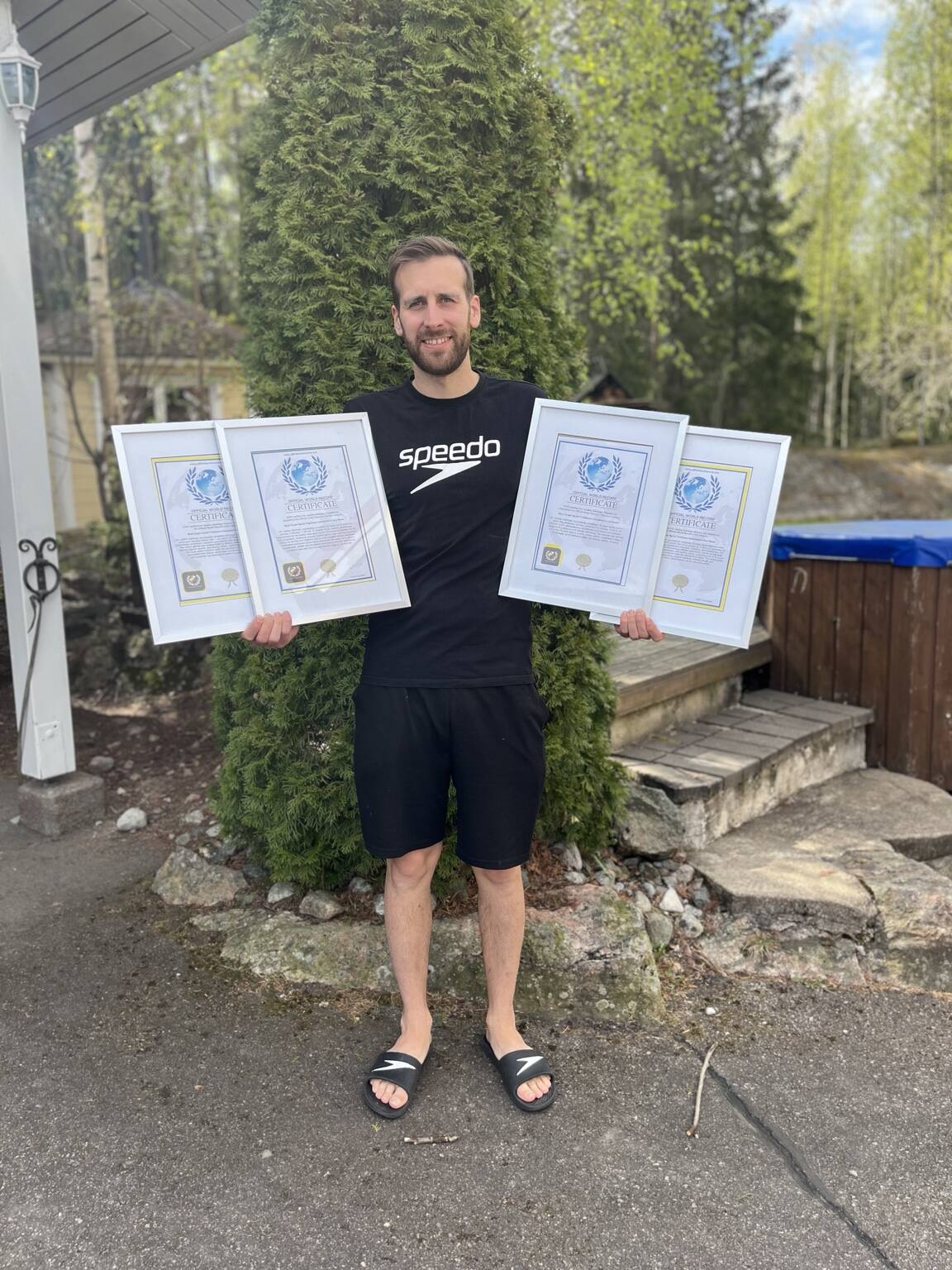
- An official certificate, produced to a high-quality standard — even the paper itself is chosen to reflect the prestige of the achievement
- A trophy and medal, recognized for their careful, glamorous, and distinctive design
- Multiple copies of your certification, so you have physical evidence of your achievement to keep or share
- Inclusion in OWR’s official records list, accessible on the OWR website
- The possibility of being featured in the Official World Record Book, published in over 322 languages
Beyond the physical recognition, OWR also provides logos and promotional material to help you publicize your achievement, along with ongoing support and monitoring throughout your record attempt — all part of the personalized treatment that defines how OWR works with applicants.
Why This Process Protects Record Holders
It might be tempting to think a shorter, simpler process would be more convenient. But the layers built into OWR’s verification system exist for a reason: they protect the credibility of every record holder.
Here’s why that matters:
- Your achievement can’t be dismissed as unverified. Because your record went through Instruction Judges, the International Acceptance Committee, and a notarized validation process, no one can credibly question whether it actually happened or whether the rules were followed.
- Your certification carries legal weight internationally. Thanks to the apostille and recognition by notary colleges in 114 Hague Convention member countries, your record isn’t just a regional claim — it’s backed by a globally recognized legal process.
- You’re protected from being confused with fake or unverified record claims. With so many unofficial “record” claims circulating online, having gone through an institutional, rules-based process clearly separates your achievement from a viral video with no formal standing.
- Your record becomes part of a permanent, accessible archive — searchable on OWR’s website and potentially published in the official record book — rather than disappearing into a social media feed.
In short, the rigor of the process is what makes the result worth having.
Conclusion
A record is only as credible as the process behind it. Anyone can film an attempt and post it online, but only a structured, independently reviewed, and legally recognized process can turn that attempt into an official world record.
At OWR, that process runs from your first application through specialized Instruction Judges, a dedicated International Acceptance Committee, and notarial validation recognized in 114 countries worldwide — resulting in a certificate, trophy, and medal that genuinely reflect the achievement behind them.
If you’ve accomplished something extraordinary — or you’re planning to — don’t leave it unverified.
Apply for Verification with OWR and turn your achievement into an official, internationally recognized world record.