
70 MPH Indoors: Caleb Keeton’s
Dodgeball Speed Record
A focused test of throwing power, equipment control and radar-measured speed using a 7-inch foam dodgeball
One athlete, one foam dodgeball, one radar reading and a highest recorded speed of 70 mph.
Speed is one of the most immediate measures of athletic power. In dodgeball, however, speed is only meaningful when the attempt is controlled, the equipment is clearly identified and the measurement can be documented. Caleb Keeton of the United States submitted an indoor throwing performance built around those basic principles: a foam dodgeball, a radar-based speed reading and a simple objective – throw the ball as fast as possible under the defined conditions. The highest recorded speed reported for the attempt was 70 miles per hour.
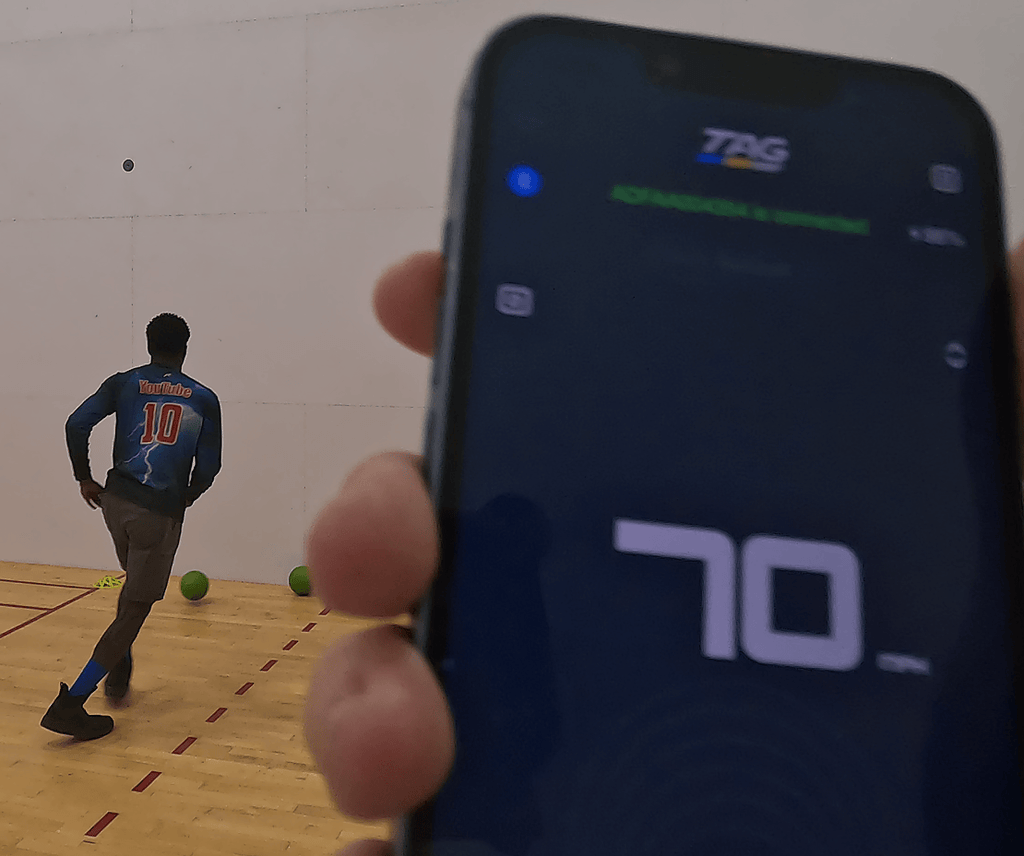
The proposed Official World Record category is: “Fastest Indoor Dodgeball Throw Using an Official USA Professional 7-Inch Foam Dodgeball.” The category is intentionally specific. It identifies the environment as indoors, the implement as a 7-inch foam dodgeball and the performance variable as measured throwing speed. That specificity matters because different ball sizes, materials, surfaces and measuring methods can produce very different results. A narrowly defined category gives the achievement a clear technical identity and makes future comparisons more meaningful.
The ball submitted with the record materials is a green USA Dodgeball-branded Baden foam dodgeball. The photograph supplied for the file visibly shows the USA Dodgeball and Baden markings on the ball. Rather than treating the ball as a generic object, the record wording preserves the equipment specification supplied with the attempt so that the performance can be understood in its proper context.

Speed measurement was carried out with a TAG One Sports Radar device. The equipment documentation supplied with the application describes the TAG One as using Doppler radar technology to measure moving objects. It explains that the unit emits low-power radio waves, detects their reflection from the moving object and can measure speed when the device is positioned in front of or behind the flight path. The same instructions emphasize correct alignment with the object’s path and recommend providing sufficient flight distance for the radar to capture an accurate reading. These details are important because a speed record depends not only on the athlete’s throw, but also on a measurement setup capable of capturing that throw consistently.
Keeton’s submitted profile presents him as a professional dodgeball player and content creator whose work centers on dodgeball highlights, trick shots and athletic challenges.
His online identity is closely connected to the sport and the record attempt fits naturally within that body of work: a direct, measurable challenge that turns a familiar dodgeball skill into a performance benchmark. The supplied profile also states that Keeton serves in the U.S. Army, adding another dimension to a personal story built around discipline, training and performance.
What makes a speed attempt compelling is its simplicity. There is no complex scoring system and no subjective judging of style. The question is straightforward: how fast did the ball travel? Yet achieving a strong result still requires coordination through the entire throwing motion – stance, loading, shoulder rotation, arm acceleration, wrist action and release. With a lightweight foam ball, the thrower must transfer force efficiently while still keeping the ball on a useful line for the radar to register the flight. A powerful throw that leaves the measurement path can be difficult to record accurately which makes control an important part of the attempt even when maximum speed is the goal.
The reported 70 mph result therefore represents more than a number on a display. Within the defined category, it is the outcome of an indoor athletic attempt using specified dodgeball equipment and radar speed measurement. The supporting materials give the record a technical frame: the ball is visually documented and the radar instructions explain the measurement technology and recommended setup. For Official World Record® purposes, those elements help establish what equipment was used and how the performance was intended to be measured.
Keeton’s record project also reflects the broader appeal of measurable sports challenges. Dodgeball is often associated with team play, reactions, accuracy and evasive movement, but a speed-based individual category isolates one physical attribute and gives it a clear benchmark. It creates a challenge that other qualified athletes can understand: use the defined equipment, follow the approved measurement conditions and attempt to exceed the standing performance.
Official World Record recognizes achievements by defining the category precisely and evaluating the submitted evidence against the applicable requirements. In Keeton’s case, the record narrative is deliberately focused on the performance that can be stated clearly: an indoor dodgeball throw, a defined 7-inch foam ball and a highest recorded speed of 70 mph. The result captures a moment where athletic power, sport-specific skill and measurement technology meet in a single, easily understood challenge.
For Caleb Keeton, the achievement is consistent with a public profile centered on pushing dodgeball performance through highlights, trick shots and record-style challenges. For the sport, it provides a distinctive speed benchmark. And for audiences watching the throw, the appeal is immediate: one athlete, one ball, one radar reading and a clear target – maximum speed.
