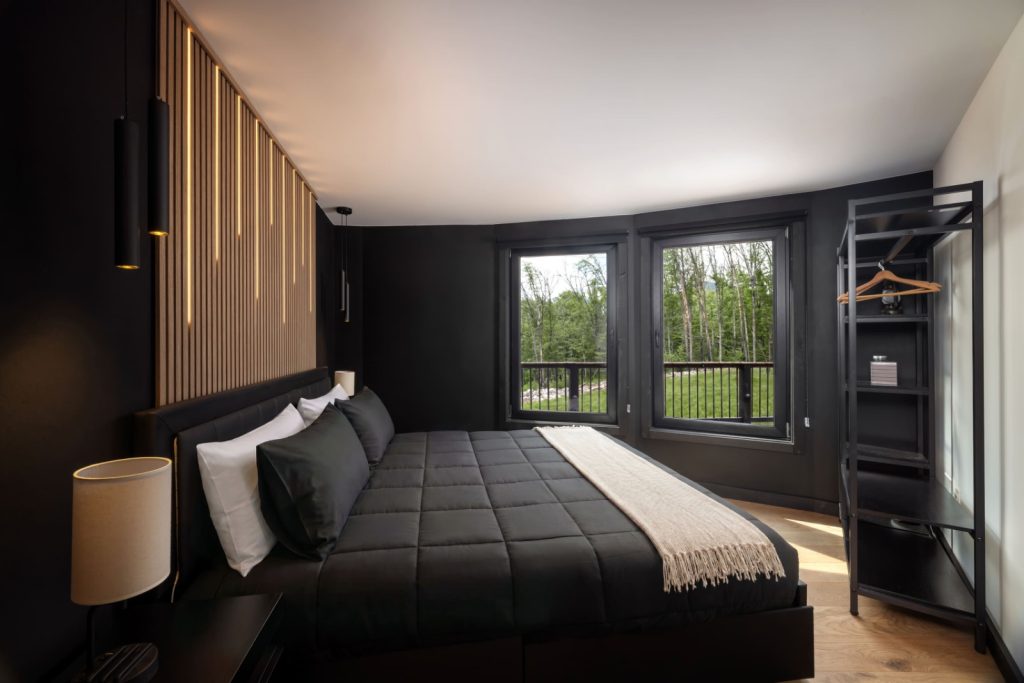
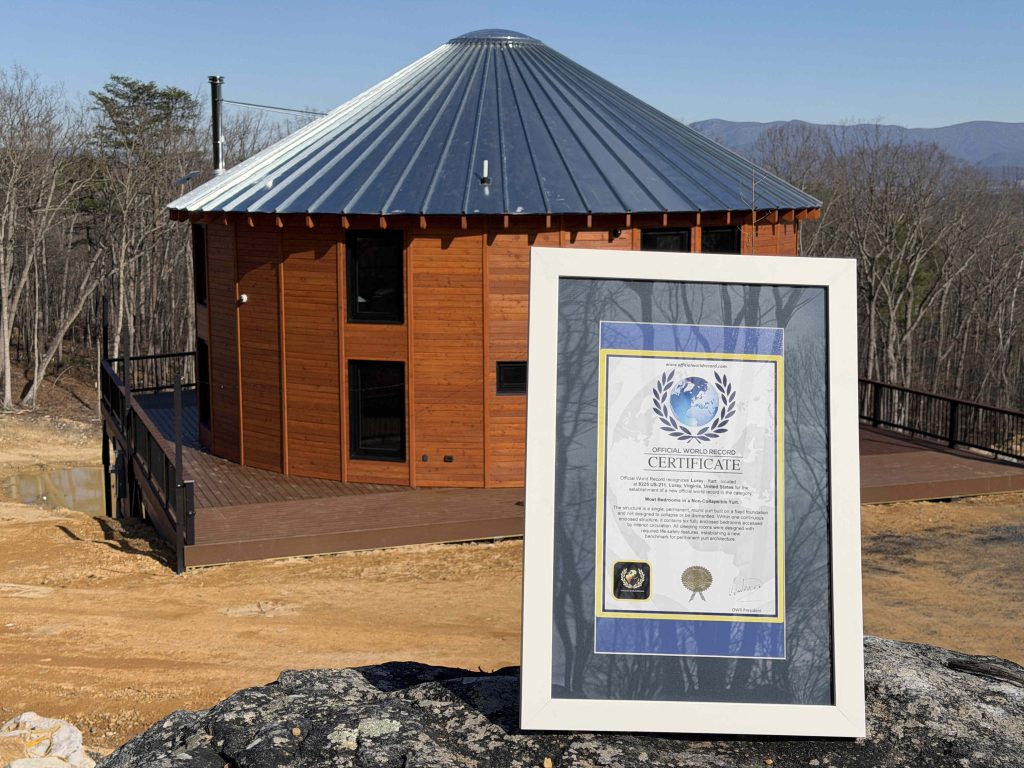
At 8225 US 211 in Luray Virginia, United States stands a structure that quietly but decisively expands the definition of what a yurt can be. Known as the Luray Yurt by Nomad Inc., this building holds the recognized record for the most bedrooms in a non collapsible yurt. The record documents six enclosed bedrooms within a single continuous round structure that is permanently installed on a fixed foundation. While yurts are often associated with temporary or seasonal use, this project demonstrates how yurt architecture can evolve into a permanent, code compliant and sophisticated residential and hospitality form.
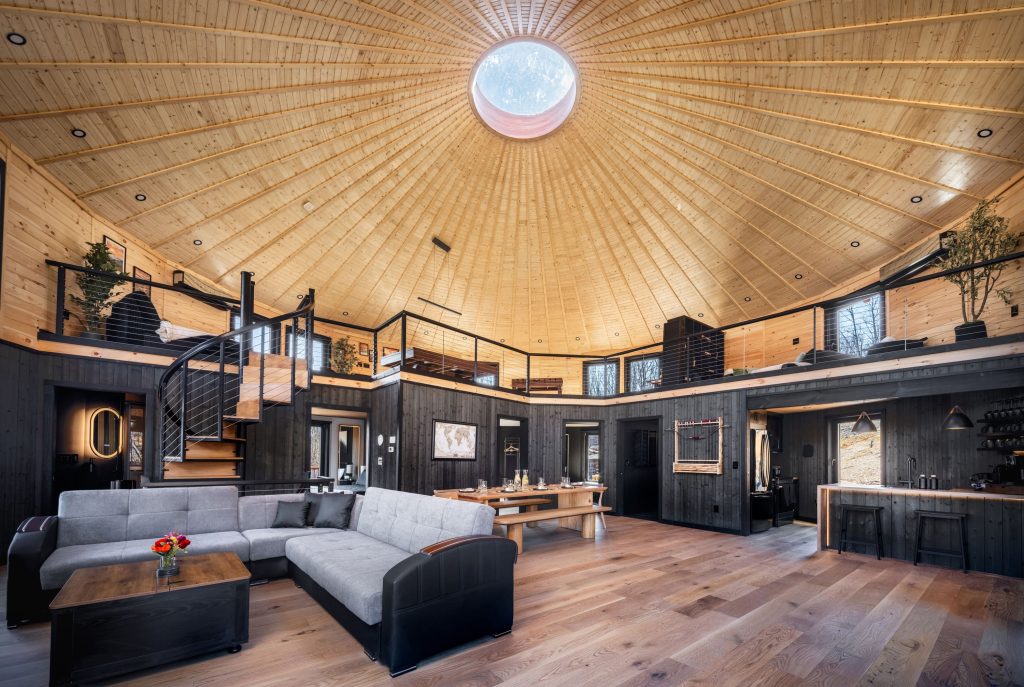
The defining feature of this record is the structural classification of the building itself. This is not a tent, nor is it a collapsible or demountable structure. The yurt is a permanent installation designed and constructed to remain in place. It sits on a fixed foundation and was not intended to be folded, packed or relocated. This distinction is essential to the record because it places the structure within the category of permanent buildings rather than temporary shelters. The building’s form is round, consistent with traditional yurt geometry but its construction methods, materials and integration with a foundation align it more closely with modern residential architecture.
Within this single continuous structure are six enclosed bedrooms. Each bedroom is a separate room fully enclosed by walls and accessed through a door. These bedrooms are not detached pods, loft partitions or open sleeping alcoves. They are individual rooms integrated into the overall interior layout of the yurt. Access to each bedroom occurs through interior circulation within the same structure, reinforcing the fact that the building functions as one cohesive interior environment rather than a collection of separate units. The bedroom count is central to the significance of this record. In many yurt based designs, sleeping arrangements are typically open plan or limited to one or two rooms created with partial partitions.
By contrast, this yurt contains six fully enclosed bedrooms within a single round footprint. This level of interior subdivision is uncommon in yurt architecture, particularly when combined with a non collapsible and permanent construction approach. The record therefore recognizes not only a numerical achievement but also a conceptual shift in how interior space within a yurt can be organized.
Life safety and building code considerations were integral to the design and construction of the sleeping rooms. The bedrooms and related life safety features were designed and built consistent with requirements for sleeping rooms, including emergency escape and rescue openings, minimum room dimensions and required egress. These features ensure that the bedrooms function in the same way as sleeping rooms in conventional residential buildings. While final determinations of code compliance remain with the building official having jurisdiction and the project permit records, the intent and execution of the design reflect an adherence to established safety standards.
The fact that these bedrooms are code compliant is a key aspect of the record’s credibility and relevance. The record does not simply count enclosed spaces labeled as bedrooms. It recognizes enclosed, code compliant sleeping rooms designed with appropriate life safety features. This emphasis underscores the seriousness of the project and distinguishes it from novelty constructions or informal adaptations. It demonstrates that high bedroom density within a yurt form can be achieved responsibly and within the framework of modern building regulations.
Nomad Inc., the designer and builder of the Luray Yurt, approached the project with the goal of demonstrating the potential of yurt architecture beyond its traditional limits. The company’s work on this structure shows how the iconic round form of a yurt can be adapted for permanent residential and hospitality uses. By integrating six enclosed bedrooms into one continuous structure, Nomad Inc. illustrates that yurts can support complex interior programs typically associated with larger conventional buildings.
The location of the structure in Luray Virginia adds contextual relevance to the record. The region is known for its natural beauty and tourism and yurts are often associated with outdoor experiences and alternative lodging. In this setting, the Luray Yurt bridges the gap between rustic inspiration and modern comfort. It demonstrates that a yurt can offer the privacy and functionality expected in a multi bedroom lodging or residence while maintaining the distinctive spatial experience of a round structure.
From an architectural perspective, fitting six enclosed bedrooms into a round footprint requires careful planning. Rectilinear rooms must be arranged within a circular envelope, balancing efficiency with spatial coherence. The successful integration of these rooms within one continuous interior highlights thoughtful design decisions related to circulation, wall geometry and shared spaces. Each bedroom connects to interior circulation rather than external access, reinforcing the sense of a unified interior environment.
The record title, Most bedrooms in a non collapsible yurt, reflects both a quantitative and qualitative achievement. Quantitatively, six bedrooms represent the highest documented number of enclosed bedrooms within a single non collapsible yurt structure. Qualitatively, the record emphasizes permanence, enclosure and code compliant design. Together, these elements define the parameters of the record and establish its significance within the broader conversation about alternative architecture.
This record also speaks to evolving perceptions of what constitutes a yurt. Historically, yurts were portable dwellings designed for nomadic lifestyles. In contemporary usage, the term yurt often encompasses a wide range of structures, from temporary tents to permanent homes. By clearly defining the structure as non collapsible and permanently installed, this record clarifies the category it occupies. It affirms that yurt inspired architecture can be both rooted in tradition and adapted to modern expectations of durability and functionality.
For hospitality and residential design, the implications are notable. A single round structure with six enclosed bedrooms offers opportunities for group lodging, retreats or shared living arrangements. The Luray Yurt demonstrates that such uses can be accommodated within a yurt form without sacrificing privacy or safety. This opens the door for designers and developers to consider yurts as viable options for projects that require multiple sleeping rooms within a distinctive architectural envelope.
The recognition of this record provides documentation and acknowledgment of the project’s achievement. It captures a specific moment in the evolution of yurt architecture, marking a benchmark for what has been built and verified. As future projects explore similar ideas, this record serves as a reference point, illustrating what is possible within the defined criteria of a non collapsible yurt.
In a broader sense, the Luray Yurt by Nomad Inc. represents innovation through thoughtful reinterpretation rather than radical departure. The structure maintains the essential characteristics that make a yurt recognizable, including its round form and centralized organization, while integrating features associated with permanent buildings. The result is a hybrid that respects tradition while embracing modern building practices.
Ultimately, the record for the most bedrooms in a non collapsible yurt is about more than a number. It is about demonstrating the adaptability of a familiar architectural form and documenting a specific, verifiable achievement. Located in Luray Virginia, designed and constructed by Nomad Inc. and featuring six enclosed, code compliant bedrooms within one continuous round structure on a fixed foundation, the Luray Yurt stands as a clear example of how alternative architecture can meet contemporary needs. Its recognition in record books and web mentions reflects both the uniqueness of the project and its contribution to the ongoing evolution of yurt based design.