
The World’s Rarest Officially Registered Cat Breed
The Kanaani and the Documented Revival by Rabbi Mikhail Salita Official World Records certifies that the Kanaani is the world’s rarest officially registered cat breed and that Rabbi Mikhail Salita of Brooklyn, New York, USA, is the sole officially registered breeder and custodian responsible for its documented revival, in the establishment of a new Official World Record in the category of World’s Rarest Officially Registered Cat Breed (Kanaani) and Sole Documented Revival Programme Custodianship. Origins and Heritage of the Kanaani The Kanaani is an experimental short-haired domestic cat breed originating in Israel, developed from hybrid crossings between domestic cats and the African wildcat (Felis lybica), with domestication and breed development still considered ongoing. Its name derives from the land of Canaan, the ancient designation for the region encompassing present-day Israel and its neighbouring territories and the breed was developed to resemble the native wild steppe cat of that historic region.…

Establishment of a New Official World Record for Animal Rehabilitation in India
On 3 December 2025, a significant milestone in animal welfare and rehabilitation was achieved in India when OWRofficially certified Shree Bidada Sarvodaya Trust and Jaya Rehabilitation Institute & Research Center for establishing a new official world record in the category “Most Cows Fitted with Prosthetic Limbs in Less Than Eight Hours.” This achievement highlights the growing role of professional rehabilitation practices in improving the quality of life for injured animals through structured medical care and assistive technology. The record attempt took place at Kamdhenu Gau Seva Trust, specifically at its Gau Saarvar Kendra located near Sanidev Mandir on the Aadipur–Anjar Highway in Megpar Khumbaradi, Anjar, within the Kutch District of Gujarat, India. This location is well known for its commitment to the care and protection of cattle, making it a suitable and ethical setting for such an event. The record was conducted on the occasion of World Disability Day, a date that symbolically reinforced the event’s focus on rehabilitation, inclusion…

The Largest Tree Seed Dispersal in a Single Day
In an extraordinary display of environmental commitment and human perseverance, Rahul Kumar Solanki and Vikram Parmar from Mehsana, Gujarat, India achieved an unprecedented feat that captured the world’s attention. On 06 July 2025 they successfully executed the largest tree seed dispersal in a single day, releasing an astonishing 175 crore or 1.75 billion seeds across the mountainous, rocky and drought prone terrains of Gujarat. This achievement is officially recognized by Official World Record under the title The Largest Tree Seed Dispersal in a Single Day. This historic event stands as a testament to the power of grassroots environmental action and the profound impact that individual initiative can have on ecological restoration. The scale, planning and dedication involved in dispersing billions of seeds within a single day place this project among the most significant reforestation efforts ever recorded. A Mission Rooted in Sustainability Unlike modern reforestation initiatives that rely on heavy…

Zico Pieri: Breaking Barriers with an Official World Record in Consecutive Everestings
Italian cyclist Zico Pieri has made history by setting an Official World Record for the most consecutive Everestings, an extraordinary achievement that pushes the boundaries of endurance cycling. Everesting, a grueling challenge in which participants repeatedly climb a hill until they reach an elevation gain equal to Mount Everest’s height (8,848 meters), is a test of physical and mental resilience. While completing just one Everesting is a monumental feat, Zico went far beyond, completing 10 consecutive Everestings over nearly 12 days. His accomplishment, certified as an official record, not only establishes him as a pioneer in endurance cycling but has also become the focus of a scientific study by the University of Urbino. Zico’s journey began on June 28, 2022, at 1:01 AM on Monte Petrano in Cagli, Italy, and concluded on July 10, 2022, at 12:14 AM. Over 11 days, 23 hours, and 46 minutes, he completed 110 climbs…
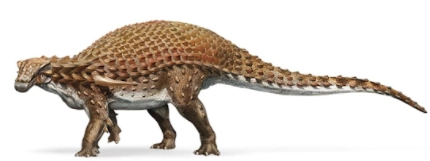
Shockingly lifelike dinosaur fossil
It was 18 feet long and built like a tank. Now its mummified remains have emerged from an oil sands mine in Canada. No, it’s not the plotline of a summer blockbuster. It’s science: breathtaking, take-you-back-in-time science. Borealopelta (meaning “Northern shield”) is a genus of nodosaurid ankylosaur from the Lower Cretaceous of Alberta, Canada. Meet nodosaur, the crown jewel of a newly opened dinosaur exhibit at the Royal Tyrrell Museum of Palaeontology in Alberta, Canada. What makes the nodosaur staggeringly unique isn’t its size (we get it; dinosaurs were big), but its almost unprecedented state of preservation. Considering the nodosaur is roughly 110 million years old, the sleeping giant you see when you look at it is astounding. For one thing, you don’t see bones; most of the skeleton is undetectable because it’s covered in fossilized skin and, as the museum describes it, “encased in intact body armour.” Nodosaurs were herbivores…
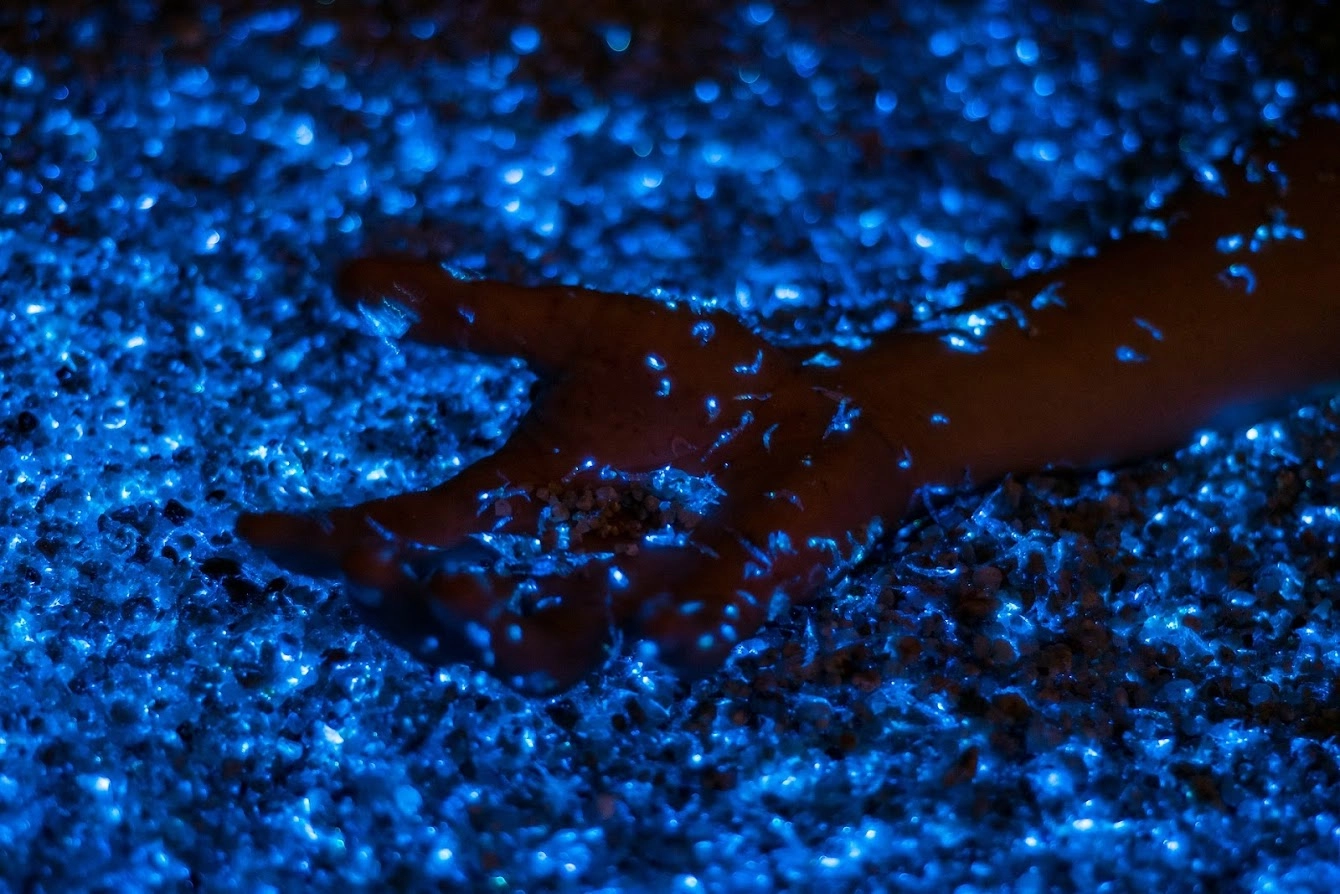
The country with the most bioluminescent bays in the world
During the nights, three bays of Puerto Rico shine with their own light under a tropical sky full of stars. These incredible places, located in La Parguera, Lajas; Laguna Grande in Las Croabas, Fajardo and Mosquito Bay, Vieques, are three of the extremely rare places in the world where the perfect conditions are found for the spectacle of bioluminescence to repeat itself without interruption throughout all the seasons of the year. In fact, only 5 places in the world meet the conditions to be recognized as bioluminescent bays or bio-bays. Until the mid-20th century, the bioluminescent bays of Puerto Rico were a secret known only to locals since their location in rural areas of southern and eastern Puerto Rico was not known by many. Today, thanks to the conservation efforts of residents and organizations of the Island, visitors from all over the world can enjoy the natural wonder that these…

Highest global emissions of carbon dioxide
The United Nations World Meteorological Organization stated that in 2018, the levels of the three main heat-trapping gases emitted into the atmosphere (carbon dioxide –CO2-, methane, and nitrous oxide) have reached yet another high. So, the wold saw about 36.57 billion metric tons of carbon dioxide emitted in 2018. Also this was confirmed by the International Energy Acency (IEA). Petteri Taalas WMO Secretary-General warned that “the future welfare of mankind” was at stake. In an appela to Goverments to do more to reverse countries’ reliance on producing energy from fossil fuels, in line with the 2015 Paris Agreement on Climate Change. We have again broken records in carbon dioxide concentrations and we have already exceeded 400ppm level which was regarded as a critical level,” he said, in reference to the 407.8 parts per million reading for 2018. “That happened already two years ago and this carbon dioxide concentration continues and…
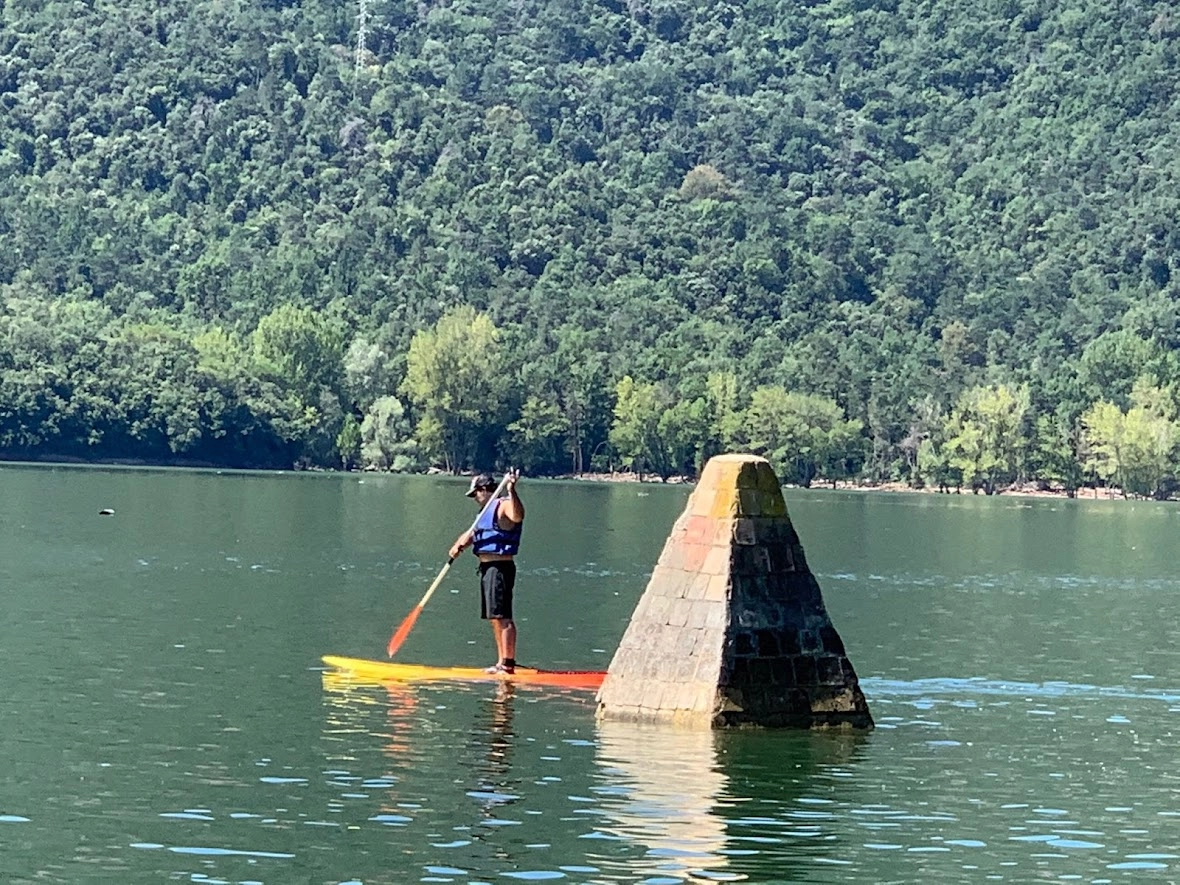
The oldest church in the world that remains submerged in water
Official World Record certifies that the Church of Sant Romà de Sau is the oldest in the world that remains submerged in water. One year ago, OWR began a periodical investigation to include new cultural records on highlights from around the world. The research on the Church of Sant Romà de Sau was carried out with the collaboration of the DIDPATRI Research Group (Didactics of Heritage) of the University of Barcelona. Research confirms that the Church of Sant Romà de Sau is the oldest in the world submerged in water and that it stands upright. It dates from 1061 and is in the Lombard Romanesque style. The old town of Sau originated around the year 917, and the parish church was consecrated in 1062. 900 years later, in 1962, the swamp was built and was expected to cover the town, which was moved to Vilanova de Sau. Therefore, the church…

The longest Line of Moais in the world
OWR certifies that the monument located in Chile , in the north west of Easter Island, called (Ahu Tongaraki), is the line with the longest standing moais in the world. With fifteen moais online and standing, this set is currently unique in monuments of this style. The origin of Easter Island dates from about three million years ago, this was created by volcanic eruptions. It is an island of Chile, located in Polynesia Oceania in the middle of the Pacific Ocean, measuring 163.6 km2, located 3515 km west of Chile. A moái (from rapanui: moai, sculpture) is a monolithic statue located on Easter Island belonging to the Valparaiso region The fifteen moais are restored since on Easter Island there were wars between the tribes that inhabited it and all the moais were shot down. At the entrance of (Ahu Tongaraki) there is a smaller moai which they call the “traveling…

The Largest Diamond
The largest diamond ever discovered is the 3106 carat Cullinan,wich was found near Pretoria in South Africa in the year 1905. It was cut into several polished gems,of wich the two largest , the Greater Star of Africa and the Minor Star of Africa,are among the jewels of the Crown of the Great Britain. Mr Frederick Wells (who found it ) it was not too impressed to find the diamond because he thought it was a crystal . When he realized the real value of his descovery,he understood that the jewel´s weight was too great: having it was dangerous,but selling it was very difficult. Finally,he managed to sell it in 1907 to the Transvaal goverrnment for 150.000 pounds . The Praetorian region wanted to make a nice gift to the British King Edward VII . The size of the gem was extraordinary and cut it was entrusted to the Royal…

The most ancient Olive Tree
Probably the most ancient olive tree in the world is in the village of Al Walaja in the Bethlehem district. Two groups of experts from Japan and Europe dated to Al Badawi (The Big), as the Palestinians call it, between 4,000 and 5,000 years old, making it the oldest in the world. Most ancient olive trees are found in the Mediterranean area where this tree is part of its biodiversity and intertwine with its culture. Olive trees are grown in eight EU countries, including Spain, Italy and Greece. They also grow in Syria, Iran and California. Another exemple is the olive tree of Vouves . The Ancient Olive Tree of Vouves is located on the island of Crete and is considered one if the oldest olive tree in the world. And it still produces olives! Archaeological evidence suggests that wild olives were already collected around 19,000 B.C. The olive tree…

The city with the Most Magnificent Temples in the world
The Lebanese city of Baalbek, 86 kilometers east of Beirut, has been home to great civilizations of history during its 5,000 years. The city of Baalbek, considered “the most splendid city of temples in the world,” made up of Mediterranean, Phoenician, and Roman peoples, has hosted many civilizations throughout its history. Located in the Beka Valley in eastern Lebanon, the historic city of Baalbek is waiting for tourists to visit again after the end of the conflicts that have been experienced in the region in recent years. Baalbek, during its most glorious time in Roman times, was visited by many emperors. It is still unclear why the Romans paid so much attention to this city and why they spent so much effort on its construction. Baalbek, was an important center of the trade route from east to west, and was considered one of the most important religious centers during the…

The Oldest Bottle of Wine in the world
The oldest bottle of wine in the world The oldest #bottle of #wine, or at least the one on record dates back to 325, is more than 1,600 years old. The bottle was discovered in 1867 during an excavation in the tombof a Roman nobleman that contained two sarcophagi, in the vicinity of the city of Speyer in Germany, and is now in the Historical Museum of Pfalz. It is believed that the man was a Roman legionary and that the wine was a provision for his heavenly journey. Of the six glass bottlesfound in the sarcophagi, only one contained liquid. It is a large container, with capacity for one and a half liters of liquid and a handle on each side. The bottle, which is sealed with wax, has never been opened because the Kaiser’s chemists, who analyzed the bottle during the First World War, claim that the white…

The Deepest Cave in the World
Krubera Cave in Abkhazia, Georgia. The cave is 2,197 meters Deep and is the deepest in the world The Ortobalagan Valley extends along the crest of the Berchil’sky anticline, which gently plunges northwest. The cave entrances are aligned along the anticlinal crest but the caves are controlled by longitudinal, transverse, and oblique fractures and faults and exhibit complex winding patterns in the plan view, remaining largely within and near the anticlinal crest zone. The caves are predominantly combinations of vadose shafts and steep meandering passages, although in places they cut apparently old fossil passages at different levels (e.g., at −2,100–2,040 m (−6,890–6,690 ft) in Kujbyshevskaja and Krubera caves, −1,200–1,240 m (−3,940–4,070 ft) and −980–1,150 m (−3,220–3,770 ft) in the non-Kujbyshevskaja branch of Krubera Cave, etc.). The deep parts of Krubera display a more pervasive conduit pattern with a mixture of phreatic morphology, characteristic of the zone of high-gradient floods, which…

The largest and heaviest Meteorite
Hoba meteorite, also known as West Hoba, is the largest and heaviest meteorite in the world and is also the largest piece of natural iron known on Earth’s surface. It receives this name because it impacted on a farm near Grootfontein in Namibia, where the year 1920 was discovered by its workers. It impacted more than 80000 years ago and since then rests in the same place. Its approximate weight is about 60 tons, but this is a very small part of its mass since when it comes into contact with the Earth’s atmosphere it begins to disintegrate and after the impact the fragmentation is obvious. A Meteorite is a fragment of a celestial body that falls to Earth, or on any star, and after impact the fragmentation is rare. This definition implies that not only are there meteorites on Earth, but there are also those on the Moon, Mars,…

The tree with the largest Trunk Diameter in the world
Mexico’s most famous tree, the ginormous Tule Tree (Arbol del Tule) grows near Oaxaca City. Residents celebrate the famous Tule Tree the second Monday of October. It’s a big party fit for a big tree! The Tule Tree may not be the tallest or the oldest tree in the world, but it has no contenders for widest girth award. It’s a natural wonder. It’s best not to look at the tree as a single icon. Indeed there is a family of ancient trees. Rooted in the town of Santa María del Tule, the Tule Tree and its environs comprise a unique natural monument. The town boasts several extremely large and ancient Montezuma Cypress trees. The largest – THE Tule Tree – dwarfs the town’s church and is more than 2,000 years old. This tree has a circumference of 54 meters (164 feet) — the largest girth of any tree on…

The longest marine Mountain Range in the world
With an extension of 80,000 km around the ocean, “Mid-oceanic Ridge” is considered the longest mountain range in the world. This underwater mountain range lies under the middle of the Atlantic Ocean (emerging in Iceland) surrounds Africa, passes through the Indian Ocean, between Australia and Antarctica, and returns north through the Pacific Ocean. This system of mountains and valleys across the globe resembles the seams on a baseball. It is submerged at a depth of between 3,000 and 5,000 meters below sea level. A true giant hidden under the waters. In terms of width, the Mesoatlantic ridge has an extension that occupies approximately 1,500 kilometers in its most important parts, and in terms of the height of its peaks it only exceeds 3,000 meters in the points closest to the surface, so it is light years from the highest mountains on the earth’s surface. The ridges are limits between tectonic…
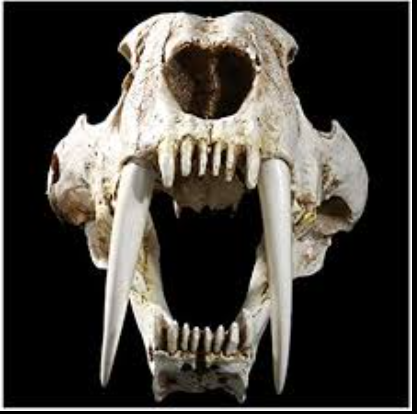
The saber-toothed tiger: The most fearsome feline
The saber-toothed tiger is one of the most iconic felines in prehistory. This now extinct animal specialized in hunting large prey with its huge tusks. The saber-toothed tiger is not one species, but three, belonging to the genus Smilodon. Males could weigh up to 300 kilograms, being the largest feline ever to exist. The main feature of this animal was its spectacular tusks. This structure stood out for its size (up to 18 centimeters) and function. he saber-toothed tiger lived in the Pleistocene, a colder, drier time than the present. In this era, glaciers covered much of Eurasia and North America, as far as the Great Lakes. South of these places, the dominant ecosystem was the prairies covered with small shrubs. In this habitat developed such iconic animals as the mammoth and other large mammals that Smilodon preyed on. About 13,000 years ago began a dramatic rise in temperatures that…